If there’s one area of women's health where we frequently use acupuncture and moxibustion, it's menstrual health.
From painful periods and heavy bleeding to irregular cycles and persistent exhaustion, your menstrual cycle can reveal a great deal about your overall health.
Endometriosis, however, is much more than just having painful periods. For many women, it's a monthly battle with debilitating cramps, chronic pelvic pain, abdominal bloating, brain fog and exhaustion that can interfere with virtually every aspect of daily life.
But have you ever noticed when your symptoms occur?
Do you start experiencing muscular aches, pelvic discomfort and headaches a few days before your period? Or do you feel relatively fine until the first day of bleeding, when you're suddenly hit with pain, exhaustion and brain fog?
In Traditional Chinese Medicine (TCM), the timing of your symptoms provides important clues about the underlying patterns of imbalance.
At AcuSoul, our acupuncture clinic in downtown Toronto, we combine acupuncture with Japanese-style moxibustion, a traditional warming therapy, to address painful periods, bloating, and brain fog associated with menstrual discomfort.
What Is Endometriosis?
Endometriosis is a chronic inflammatory condition in which tissue similar to the lining of the uterus grows outside the uterus. It can contribute to inflammation, scar tissue, chronic pain and fertility challenges.
Common symptoms include:
Severe menstrual cramps (dysmenorrhea)
Chronic lower abdominal and pelvic pain
Heavy menstrual bleeding
Abdominal bloating (endo belly)
Lower back pain and muscular aches
Brain fog and difficulty concentrating
Chronic fatigue and exhaustion
Pain during intercourse
Painful bowel movements
While acupuncture and moxibustion cannot cure endometriosis or remove endometriosis lesions, they may be considered complementary therapies for managing associated symptoms, particularly pain.
Understanding Endometriosis Through Traditional Chinese Medicine
In TCM, two of the most important organ systems associated with menstrual health are the Liver and Kidneys.
Although both play important roles throughout the menstrual cycle, their traditional functions help us understand why symptoms may change as a woman approaches menstruation and begins bleeding.
The Liver: Blood Circulation, Muscular Health & Premenstrual Symptoms
In Chinese medicine, the Liver is responsible for storing Blood and maintaining the smooth movement of Qi throughout the body.
It also has a close relationship with the tendons and muscular system.
As the body prepares for menstruation, the Liver is traditionally understood to play an important role in nourishing the uterus with Blood and maintaining its smooth movement.
When the Liver's functional resources become strained this can lead to Qi and blood stagnation, symptoms may begin to develop even before your period arrives.
These may include:
Premenstrual cramping
Lower abdominal tension
Muscular aches and stiffness
Breast tenderness
Neck and shoulder tension
Headaches
Irritability and emotional tension
Abdominal bloating
There's a fundamental principle in Chinese medicine: when Qi and Blood move freely, there is less pain. When their movement becomes obstructed, pain may develop.
The Kidneys: Menstruation, Energy & Recovery
In TCM, the Kidneys are closely associated with reproductive health, the body's foundational energy reserves, bones and the lumbar region.
While the Liver plays an important role in moving Blood, Kidney Qi is traditionally understood to help support reproductive function and holds the body's reserve resources (like your backup battery).
When menstruation begins, some women experience a noticeable decline in their energy levels.
You may feel physically heavier, struggle to concentrate or experience aches and pains in areas that weren't bothering them just a few days earlier.
From a TCM perspective, these symptoms may suggest an underlying pattern of Kidney deficiency.
The Liver and Kidney systems described in Traditional Chinese Medicine are functional concepts and should not be confused with biomedical liver or kidney disease.
Why We Combine Acupuncture & Japanese Moxibustion for Endometriosis
When it comes to menstrual pain, addressing stagnation is only one part of the equation.
What happens when the body is also exhausted, depleted or unable to maintain the warmth and energy traditionally associated with healthy circulation?
This is where combining acupuncture with moxibustion becomes particularly valuable within our TCM treatment approach.
Acupuncture: Encouraging the Movement of Qi & Blood
From a modern physiological perspective, acupuncture may influence:
The nervous system's processing of pain
Natural pain-modulating mechanisms
Muscular tension
Relaxation and stress regulation
Clinical research suggests that acupuncture may help reduce endometriosis-related menstrual and pelvic pain, although further high-quality studies are needed.
Japanese Moxibustion: Using Warmth to Address Stagnation & Depletion
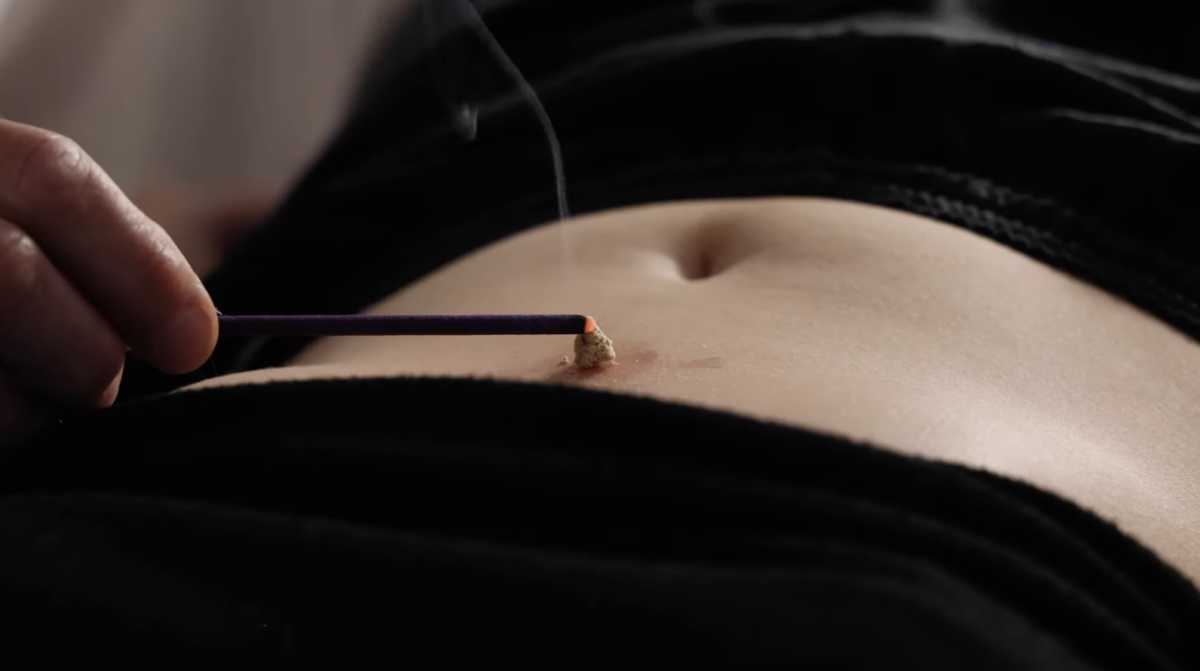
Moxibustion is a traditional heat therapy that involves burning refined mugwort, known as moxa, to deliver controlled warmth to specific acupuncture points.
In Chinese medicine, warmth is considered a form of Yang energy. It is traditionally associated with movement, circulation and the body's ability to carry out its physiological functions.
Cold, on the other hand, is associated with contraction, slowing and stagnation.
Think about how your body responds when you're cold. Your muscles tighten, your movements become more restricted, your energy is down and you might want to just lie under a thick blanket as your body naturally seeks warmth.
Within TCM, similar principles are applied when addressing certain patterns of menstrual pain.
Moxibustion is traditionally used to:
Enable blood to flow more freely
Warm areas associated with patterns of Cold
Tonify Yang energy - revitalizing the depleted reserves of the kidneys
At AcuSoul, we incorporate Japanese-style moxibustion, which frequently uses finely refined grades of moxa and smaller cones to provide a more targeted application of heat.
By combining acupuncture with moxibustion, our treatment approach addresses both the movement of Qi and Blood and, where appropriate, the underlying patterns of Cold and depletion that may contribute to discomfort.
The objective isn't simply to reduce pain. It's also to help the body feel less tense, less heavy and more comfortable.
Moxibustion is not appropriate for every TCM pattern, particularly when signs of Heat are present. Treatment is therefore individualized rather than automatically applying warmth to every painful area.
Why an Individualized Approach to Endometriosis Matters
Here's something important to understand about Traditional Chinese Medicine: we don't treat every woman with endometriosis the same way.
Two women can have the exact same medical diagnosis but experience completely different symptoms.
One woman may experience severe premenstrual cramping, muscular aches and abdominal tension, while another may feel relatively comfortable until menstruation begins, when she develops exhaustion, brain fog and lower back pain.
One may present predominantly with Blood Stagnation, while another may experience a combination of Blood Stagnation and Kidney Yang deficiency.
Even within the same person, these patterns may change throughout the menstrual cycle.
This is why our treatment approach considers:
When your pain begins and ends
The characteristics of your menstrual bleeding
Whether warmth improves your symptoms
Where your muscular aches and headaches occur
Your energy levels before, during and after menstruation
How well you recover between menstrual cycles
At AcuSoul, acupuncture and Japanese-style moxibustion are selected and adjusted according to these individual characteristics.
Acupuncture & Japanese Moxibustion for Endometriosis in Downtown Toronto
Supporting your body, not just treating your symptoms.
Living with endometriosis can be physically and emotionally exhausting.
When your period leaves you in pain, your muscles feel constantly tight, your abdomen feels heavy and you struggle to find the energy to get through your day, it's worth exploring additional ways to support your wellbeing.
At AcuSoul, our downtown Toronto acupuncture clinic combines traditional acupuncture with Japanese-style moxibustion to provide an individualized approach to menstrual health.
By considering both the timing of your symptoms and the relationship between stagnation and depletion, we tailor our treatments to what your body may need at different stages of your menstrual cycle.
Our goal is to help you manage discomfort, release tension and experience a greater sense of comfort and lightness throughout your cycle.
Your period shouldn't prevent you from living your life.
Discover how acupuncture and Japanese-style moxibustion may complement your endometriosis care.
Frequently Asked Questions About Acupuncture & Moxibustion for Endometriosis
Can acupuncture help with endometriosis pain?
Research suggests that acupuncture may help reduce endometriosis-related menstrual cramps and chronic pelvic pain by influencing pain-regulating mechanisms. Results vary, and acupuncture should be considered a complementary therapy.
Can moxibustion help with endometriosis?
In Traditional Chinese Medicine, moxibustion is used to introduce warmth, encourage the movement of Qi and Blood and address certain patterns of Cold and deficiency. It may complement acupuncture for menstrual discomfort.
Why does heat help with menstrual cramps?
Heat may help relax muscles and reduce the perception of menstrual pain. In TCM, warmth is also traditionally used to address patterns of Cold and Blood Stagnation. Moxibustion incorporates this warming approach through targeted application to acupuncture points.
Why does endometriosis pain start before my period?
Endometriosis-related pain can develop before menstruation due to several factors, including inflammation and hormonal changes. In TCM, premenstrual pain is frequently considered in relation to Liver Qi and Blood Stagnation.
Why do I experience brain fog and exhaustion during my period?
Pain, disrupted sleep, hormonal fluctuations and heavy menstrual bleeding may contribute to fatigue and brain fog. In TCM, these symptoms may also be assessed within patterns of Qi, Blood and Kidney deficiency. Persistent symptoms warrant medical assessment.
Can acupuncture and moxibustion help with endo belly?
These therapies may be incorporated into an individualized approach to accompanying abdominal discomfort and tension. However, research specifically supporting their effectiveness for endometriosis-related bloating remains limited.
When is the best time to receive acupuncture for endometriosis?
Treatment timing depends on when your symptoms are most pronounced. Some women may benefit from scheduling treatments before menstruation, while others may prefer treatment during or after their period. The treatment approach can be adjusted throughout the cycle.
Can acupuncture and moxibustion help with endometriosis-related infertility?
These therapies may provide complementary support for wellbeing during fertility treatment.
Where can I get acupuncture and Japanese moxibustion for endometriosis in Toronto?
AcuSoul is a downtown Toronto acupuncture clinic offering individualized acupuncture and Japanese-style moxibustion for menstrual health, pelvic pain and associated symptoms.
This article is intended for educational purposes and does not replace medical diagnosis or treatment. Severe or worsening pelvic pain, abnormal bleeding and persistent fatigue should be medically assessed.