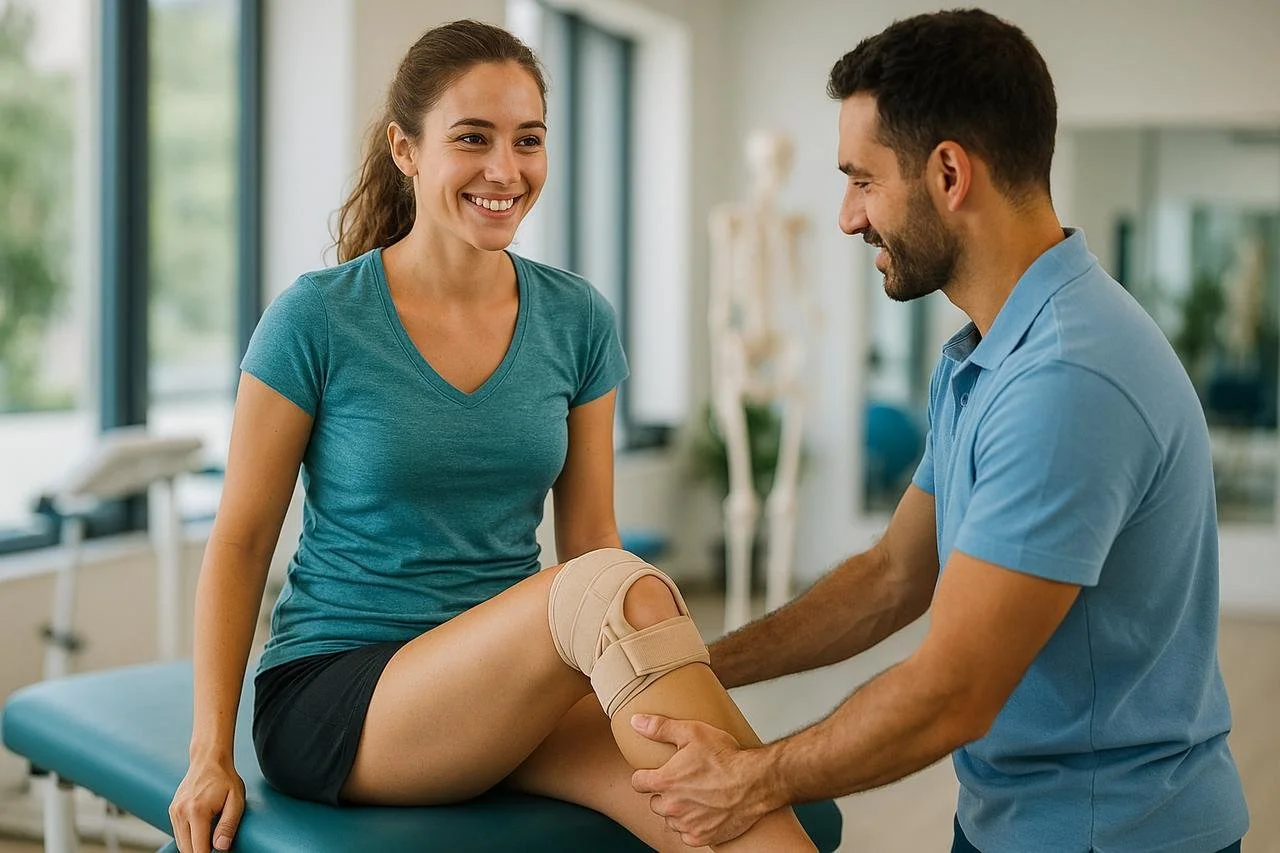
Recovering from ACL surgery? Whether you're an athlete hoping to return to sports or simply want to walk comfortably again, recovering from an anterior cruciate ligament (ACL) tear can be a long and frustrating process. Most recoveries take on average 9-12 months! But what if I told you there could be a way to speed that up?
Less tension, improved mobility, and reduced achiness and pain with use.
How you might wonder? While physiotherapy and strengthening exercises remain essential for rehabilitation, acupuncture, along with other heat treatments, such as moxibustion can improve circulation in your knee, enabling it to heal more efficiently.
At AcuSoul (King West, Toronto), we offer acupuncture and Japanese-style moxibustion as complementary treatments for musculoskeletal pain and rehabilitation.
What Happens to Your Knee After ACL Surgery?
Even after successful ACL reconstruction surgery, many people experience lingering knee pain, swelling, stiffness, muscle weakness, and difficulty regaining their normal range of motion.
Following ACL reconstruction, your body must adapt to several changes:
Inflammation and swelling: The body's natural response to surgery can cause discomfort and restrict knee movement.
Muscle weakness: The quadriceps and surrounding muscles often lose strength and become difficult to activate.
Reduced range of motion: Stiffness can make bending or fully straightening the knee challenging.
Pain and sensitivity: Surgical trauma can leave surrounding tissues tender and sensitive.
Compensatory muscle tension: Changes in walking patterns can place additional stress on the hips, calves, and lower back.
Addressing these challenges through structured rehabilitation is essential for restoring knee function.
Why Does Knee Pain Persist After ACL Reconstruction?
It's common to experience some degree of pain and stiffness during recovery, even after the surgical incisions have healed.
Several factors may contribute to persistent discomfort.
1. Post-Surgical Inflammation
Swelling within the knee joint can limit movement and interfere with normal muscle activation. Persistent swelling may also make rehabilitation exercises more uncomfortable.
2. Quadriceps Weakness
After ACL surgery, the quadriceps can become inhibited, making it difficult to fully contract the muscles responsible for straightening and stabilizing the knee.
This phenomenon, known as arthrogenic muscle inhibition, is one reason restoring strength can take considerable time.
3. Muscle Tightness and Compensation
When your knee isn't functioning normally, other muscles begin compensating.
You may notice tightness in your:
Hamstrings
Quadriceps
Calves
Hip flexors
Glutes
These compensatory patterns can contribute to discomfort beyond the original knee injury.
4. Scar Tissue and Restricted Movement
Scar tissue naturally forms as the body heals. However, excessive internal scarring or other post-surgical complications can sometimes contribute to restricted knee movement.
If your knee remains significantly stiff or you cannot regain extension as expected, consult your surgeon or physiotherapist for assessment.
How Can Acupuncture Help After ACL Surgery?
Acupuncture involves inserting very fine, sterile needles into specific areas of the body to improve circulation, reduce inflammation, stimulate sensory nerves and influence pain-processing pathways.
The potential role of acupuncture after ACL surgery is to help manage symptoms alongside physiotherapy—not to replace exercise rehabilitation.
1. Managing Post-Surgical Knee Pain
Pain can make rehabilitation exercises more challenging, particularly when attempting to restore knee mobility and strength.
Acupuncture may help some individuals experience temporary pain relief through its effects on the nervous system and pain modulation.
Reducing discomfort may make it easier to participate in prescribed rehabilitation activities, although this benefit has not been firmly established specifically for ACL reconstruction.
2. Addressing Muscle Tightness
Following ACL surgery, the muscles surrounding the knee may become tight or sensitive as the body adapts to altered movement patterns.
Acupuncture can target symptomatic muscle areas, including the quadriceps, hamstrings, and calves.
Treatment may be considered for muscle-related discomfort that develops during rehabilitation.
3. Supporting Comfort During Mobility Recovery
Regaining the ability to fully straighten and bend your knee is an important rehabilitation milestone.
Acupuncture may help with associated muscle discomfort, but restoring range of motion requires appropriate rehabilitation exercises and assessment of any mechanical restrictions.
4. Managing Secondary Pain
It's not unusual for patients recovering from ACL surgery to experience discomfort in their opposite leg, hips, or lower back.
This can develop when walking patterns change or when one leg compensates for the other.
Acupuncture may be used to address some of these secondary muscular symptoms while your physiotherapist works on restoring normal movement mechanics.
Japanese Moxibustion: An Additional Approach to Muscle Recovery
At AcuSoul, we also incorporate Japanese-style moxibustion, to improve the body’s healing and recovery.

Moxibustion is traditionally used to address feelings of coldness, stiffness, and muscular discomfort.
For individuals recovering from ACL surgery, it may be considered for surrounding muscle tension, and further addressing pain and discomfort once the surgical area has adequately healed and treatment is approved as appropriate.
Important: Heat treatments should not be applied to fresh surgical wounds. Your surgeon's post-operative precautions always take priority.
When Can You Start Acupuncture After ACL Surgery?
The appropriate time to begin acupuncture depends on your surgery, wound healing, medications, and stage of rehabilitation.
| Recovery Stage | Primary Focus | Potential Role of Acupuncture |
|---|---|---|
| Early recovery (0–2 weeks) | Wound healing, swelling management, protected mobility | Generally defer local needling until surgical clearance; discuss any treatment with your surgeon |
| Early rehabilitation (2–6 weeks) | Restoring movement and muscle activation | May be considered for muscle discomfort once wounds have healed and clearance is obtained |
| Strength-building (6–12 weeks) | Progressive strengthening and improved walking mechanics | Adjunctive symptom management for muscle tightness or pain |
| Advanced rehabilitation (3–6+ months) | Strength, balance, running progression when appropriate | Addressing associated musculoskeletal discomfort |
| Return to sport (often 9–12+ months) | Sport-specific strength, movement testing, and medical clearance | Optional support for muscular discomfort during training |
Week 6 is when we would recommend beginning full treatment (acupuncture & moxibustion). These are general timeframes, not a treatment schedule. Recovery varies substantially, particularly when ACL reconstruction is combined with meniscus repair or other procedures.
How Long Does ACL Surgery Recovery Take?
Recovery from ACL reconstruction is a gradual process that often takes 9–12 months or longer before returning to demanding pivoting sports.
Returning to everyday activities may happen much sooner, but the timeline depends on several factors, including:
The type of ACL reconstruction and graft used
Additional meniscus or cartilage injuries
Knee swelling and range of motion
Quadriceps and hamstring strength
Balance and movement control
Confidence and readiness to return to activity
Returning to sports should be based on functional testing and medical clearance, rather than time alone.
Even when your knee feels better, the reconstructed ligament and surrounding muscles may not be ready for sudden twisting, jumping, or rapid changes in direction.
Acupuncture and Physiotherapy: Working Together
One of the most important things to understand about ACL recovery is that acupuncture does not replace physiotherapy.
Physiotherapy is essential for restoring muscle strength, knee stability, balance, and coordination.
Acupuncture may complement this process by helping manage certain pain-related symptoms.
Think of the two approaches as having different roles:
Physiotherapy focuses on:
Restoring knee mobility
Rebuilding quadriceps and hamstring strength
Improving balance and stability
Retraining movement patterns
Preparing for a safe return to sports
Acupuncture focuses on:
Managing musculoskeletal discomfort
Addressing surrounding muscle tension
Improving circulation and reducing inflammation in the affected area
Providing complementary symptom management during rehabilitation
Together, these approaches may help some patients manage their recovery experience, although research has not established that adding acupuncture improves long-term ACL reconstruction outcomes.
ACL Surgery Recovery in King West, Toronto
Whether you're recovering from a soccer injury, skiing accident, basketball injury, or another ACL tear, rehabilitation requires patience and consistency.
At AcuSoul in King West, downtown Toronto, we understand how frustrating it can be when pain, stiffness, or muscle tension makes everyday movement difficult.
Our approach combines traditional acupuncture with Japanese-style moxibustion, with a focus on improving circulation to the affected area, and reducing your recovery time.
We welcome patients who are already working with a physiotherapist or sports medicine professional and are looking for complementary care.
Frequently Asked Questions About ACL Surgery Recovery
Can acupuncture help after ACL reconstruction surgery?
Acupuncture may help some patients manage musculoskeletal pain or muscle tension during rehabilitation. However, evidence specifically supporting acupuncture after ACL reconstruction is limited. It should be used as a complementary treatment alongside physiotherapy.
Can acupuncture reduce swelling after ACL surgery?
There is not enough high-quality evidence to conclude that acupuncture reliably reduces swelling after ACL reconstruction. Post-operative swelling should be managed according to your surgeon's and physiotherapist's recommendations.
Can acupuncture speed up ACL healing?
There is currently insufficient evidence that acupuncture speeds up healing of a reconstructed ACL graft or shortens the time needed to return to sports.
Is acupuncture safe after ACL surgery?
Acupuncture may be appropriate for selected patients once surgical wounds have healed and their healthcare team has cleared treatment. Needles should not be inserted into unhealed wounds or areas with suspected infection. Additional precautions are necessary for patients taking blood thinners or experiencing significant swelling.
Why does my knee still feel stiff months after ACL surgery?
Persistent stiffness may result from muscle tightness, swelling, limited rehabilitation progress, or complications such as excessive scar tissue. If your range of motion remains restricted, particularly your ability to straighten the knee, have it assessed by your surgeon or physiotherapist.
How many acupuncture sessions do I need after ACL surgery?
There is no established acupuncture treatment schedule for ACL reconstruction recovery. The number of sessions, if appropriate, depends on your symptoms, response to treatment, and rehabilitation plan.
Supporting Your ACL Recovery at AcuSoul
Recovering from ACL surgery isn't just about waiting for your knee to heal. It's about rebuilding strength, restoring movement, and gradually regaining confidence in your body.
If you're experiencing lingering knee discomfort, inflammation, muscle tightness, or secondary pain while rehabilitating after ACL surgery:
Please consult your surgeon or physiotherapist before beginning acupuncture following ACL reconstruction. Acupuncture is not a substitute for surgical follow-up, physiotherapy, or medical assessment. New calf swelling or pain, fever, wound drainage, chest pain, or shortness of breath requires prompt medical attention; chest pain or shortness of breath warrants emergency care.