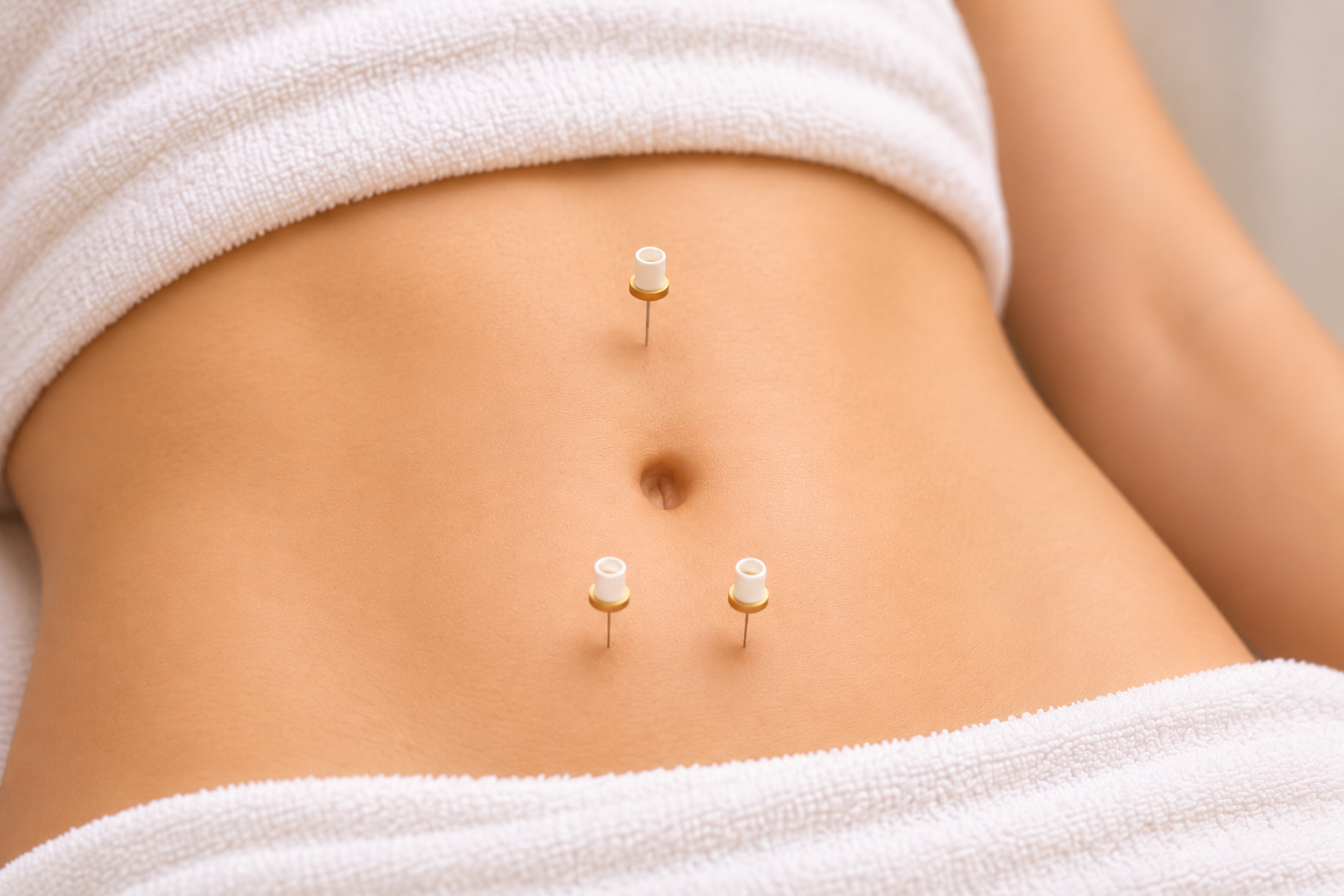
Preparing for in vitro fertilization (IVF) can be both physically and emotionally demanding. Between hormonal medications, medical appointments, uncertainty, and the pressures of everyday life, many women find themselves feeling stressed, exhausted, and overwhelmed throughout their fertility journey.
While IVF focuses on the medical aspects of conception, acupuncture takes a complementary approach by addressing your overall physical and emotional well-being.
At AcuSoul, our downtown Toronto acupuncture clinic incorporates both acupuncture and Japanese-style moxibustion to provide individualized support throughout the different stages of fertility treatment.
How Can Acupuncture Support Your IVF Journey?
IVF places additional demands on the body. Hormonal fluctuations, disrupted sleep, emotional stress, and physical discomfort can make the process particularly challenging.
Acupuncture may help address concerns such as:
Stress and anxiety surrounding fertility treatments
Difficulty sleeping
Muscular tension and physical discomfort
Headaches associated with stress
Fatigue and feelings of exhaustion
General physical and emotional well-being
Rather than focusing solely on the reproductive system, traditional Chinese medicine (TCM) considers how different systems within the body work together to support reproductive health.
When Should You Start Acupuncture Before IVF?
Ideally, patients interested in complementary fertility care may consider starting acupuncture approximately two to three months before their planned IVF cycle.
This provides time to assess your overall health, understand your menstrual cycle, and address existing imbalances such as irregular periods, heavy bleeding, clotting, painful periods, poor sleep, stress, and exhaustion before fertility treatment begins.
From a traditional Chinese medicine perspective, preparing for conception involves more than focusing on the uterus and ovaries. It also involves understanding how well the body is managing its everyday physical and emotional demands.
Many of the principles behind preparing your body for IVF are similar to those used when supporting natural conception. In our article, Acupuncture for Fertility: A Natural Way to Support Conception, we explore the relationship between menstrual health, stress, exhaustion, and reproductive well-being from a traditional Chinese medicine perspective.
However, there is no medically established optimal timeframe for starting acupuncture to improve IVF outcomes. If your IVF cycle is already underway, acupuncture may still be considered for symptom management and general well-being.
Understanding the Different Stages of IVF
Your body's needs can change considerably throughout an IVF cycle. Acupuncture treatments should be adapted accordingly, rather than following the same treatment approach at every appointment.
| IVF Stage | Primary Focus of Acupuncture Care |
|---|---|
| Preparation (2–3 months before IVF) | Addressing existing symptoms, stress, sleep, and menstrual health concerns |
| Ovarian stimulation | Supporting relaxation and managing treatment-related discomfort where appropriate |
| Egg retrieval | Rest and recovery, with treatment adapted around procedural restrictions |
| Before embryo transfer | Managing anxiety, muscular tension, and emotional stress |
| After embryo transfer | Gentle, individualized care with appropriate pregnancy precautions |
| Two-week wait | Supporting emotional well-being, relaxation, and sleep |
Treatment frequency and techniques should be adjusted based on your symptoms, medical history, and fertility specialist's recommendations.
The Role of Stress and Exhaustion in Fertility
Have you noticed changes in your menstrual cycle during particularly stressful periods of your life? Perhaps your period arrives earlier or later than expected, your menstrual cramps become more uncomfortable, or you experience increased fatigue before menstruation.
Stress, sleep disturbances, and hormonal health can be interconnected, although experiencing stress does not necessarily mean that you will have difficulty conceiving.
From a traditional Chinese medicine perspective, two organ systems are particularly relevant to reproductive health: the Liver and Kidneys.
The Liver: Stress, Menstruation and Blood Circulation
In TCM, the Liver is associated with the regulation of Qi and Blood, as well as the menstrual cycle.
When the body is under prolonged stress, practitioners may identify patterns traditionally described as Liver Qi stagnation or Blood stagnation.
These patterns may be associated with symptoms such as:
Premenstrual irritability
Breast tenderness
Muscular tension
Menstrual cramps
Headaches
Irregular menstrual cycles
Acupuncture treatments may be directed toward addressing these symptom patterns and encouraging relaxation.
The Kidneys: Reproductive Health and Exhaustion
In traditional Chinese medicine, the Kidneys are closely associated with reproductive health, development, aging, and the body's constitutional energy reserves.
Patients experiencing prolonged exhaustion may also report symptoms such as:
Persistent fatigue
Cold hands and feet
Lower back discomfort
Reduced libido
Changes in menstrual patterns
From a TCM perspective, these symptoms may help guide an individualized fertility acupuncture treatment.
These traditional organ-system concepts are distinct from the biomedical functions of the liver and kidneys and do not indicate that either organ is medically impaired.
Why We Combine Acupuncture and Japanese Moxibustion for Fertility
At AcuSoul, we do things a little differently. In addition to acupuncture, we incorporate Japanese-style moxibustion, a traditional warming therapy, when appropriate.
Moxibustion involves burning a prepared herb called moxa, derived from mugwort, to provide localized therapeutic warmth.
Japanese-style moxibustion commonly uses small quantities of refined moxa, allowing for a more controlled application of heat.
From a traditional Chinese medicine perspective, warmth is used to address patterns of Cold and stagnation, which may be associated with physical discomfort, menstrual pain, and sensations of coldness.
For patients who frequently experience cold hands and feet, lower abdominal discomfort, muscular tightness, or feelings of exhaustion, moxibustion may be incorporated into their individualized treatment plan.
By combining acupuncture with moxibustion, we can approach treatment through both needle stimulation and gentle warming techniques.
However, moxibustion is not appropriate for everyone or every stage of IVF. Its use must be adapted around medical procedures, embryo transfer, and possible pregnancy.
Can Acupuncture Improve IVF Success Rates?
One of the most common questions patients ask is whether acupuncture can improve their chances of becoming pregnant through IVF.
Although acupuncture has been studied in relation to reproductive blood flow, stress, implantation, and pregnancy outcomes, research findings remain inconsistent.
There is currently insufficient reliable evidence to conclude that acupuncture increases IVF live birth rates, improves egg quality, or increases the likelihood of successful implantation.
The role of acupuncture is best understood as a complementary therapy that may help patients manage certain physical and emotional symptoms throughout fertility treatment, rather than a replacement for reproductive medicine.
How Often Should You Get Acupuncture During IVF?
Treatment frequency depends on your individual symptoms, where you are in your IVF cycle, and your overall health.
Some patients may begin with weekly acupuncture appointments during the preparation phase, with adjustments as they progress through fertility treatment.
At AcuSoul, we take into consideration:
Your menstrual and fertility history
Previous fertility treatments
Stress levels and sleep quality
Existing physical symptoms
Your current IVF treatment schedule
Your overall health and well-being
There is no universal acupuncture treatment schedule proven to improve IVF success. Our approach is to tailor each treatment to your individual needs.
Fertility Acupuncture in Downtown Toronto
Whether you are preparing for your first IVF cycle, undergoing fertility treatment, or recovering physically and emotionally from a previous unsuccessful cycle, taking care of your overall health remains important.
At AcuSoul, we combine traditional acupuncture and Japanese-style moxibustion to provide individualized complementary care throughout your fertility journey.
Our downtown Toronto acupuncture clinic focuses on menstrual health, hormonal health, fertility support, and overall physical well-being.
Give yourself the time and space to prepare for your fertility journey.
Frequently Asked Questions
Can I start acupuncture if I have already started IVF?
Yes. Depending on your medical circumstances, acupuncture may be considered at different stages of IVF. Inform your acupuncturist about your medications, upcoming procedures, and fertility specialist's recommendations.
Should I get acupuncture before or after embryo transfer?
Acupuncture may be considered before or after embryo transfer for relaxation and symptom management. However, evidence does not establish that either timing improves implantation or live birth rates.
Can acupuncture help improve egg quality?
There is currently insufficient clinical evidence to establish that acupuncture improves egg quality. Acupuncture should not replace medical evaluation or fertility treatments recommended by your specialist.
Can I receive acupuncture during the two-week wait?
Acupuncture may be considered during the two-week wait, provided appropriate precautions are taken for possible pregnancy. Always inform your practitioner that you have undergone embryo transfer.
Is moxibustion safe during IVF?
Moxibustion may be considered during certain stages of fertility preparation, but its suitability depends on your individual circumstances. Treatment techniques and locations should be adjusted around fertility procedures and possible pregnancy.
Can acupuncture be combined with IVF medications?
Acupuncture can often be incorporated alongside conventional fertility care. However, your practitioner should be aware of all medications you are taking, particularly medications that may increase bleeding or bruising risk.
Acupuncture and moxibustion are complementary therapies and are not substitutes for medical fertility treatment. Individual experiences vary, and pregnancy outcomes cannot be guaranteed.