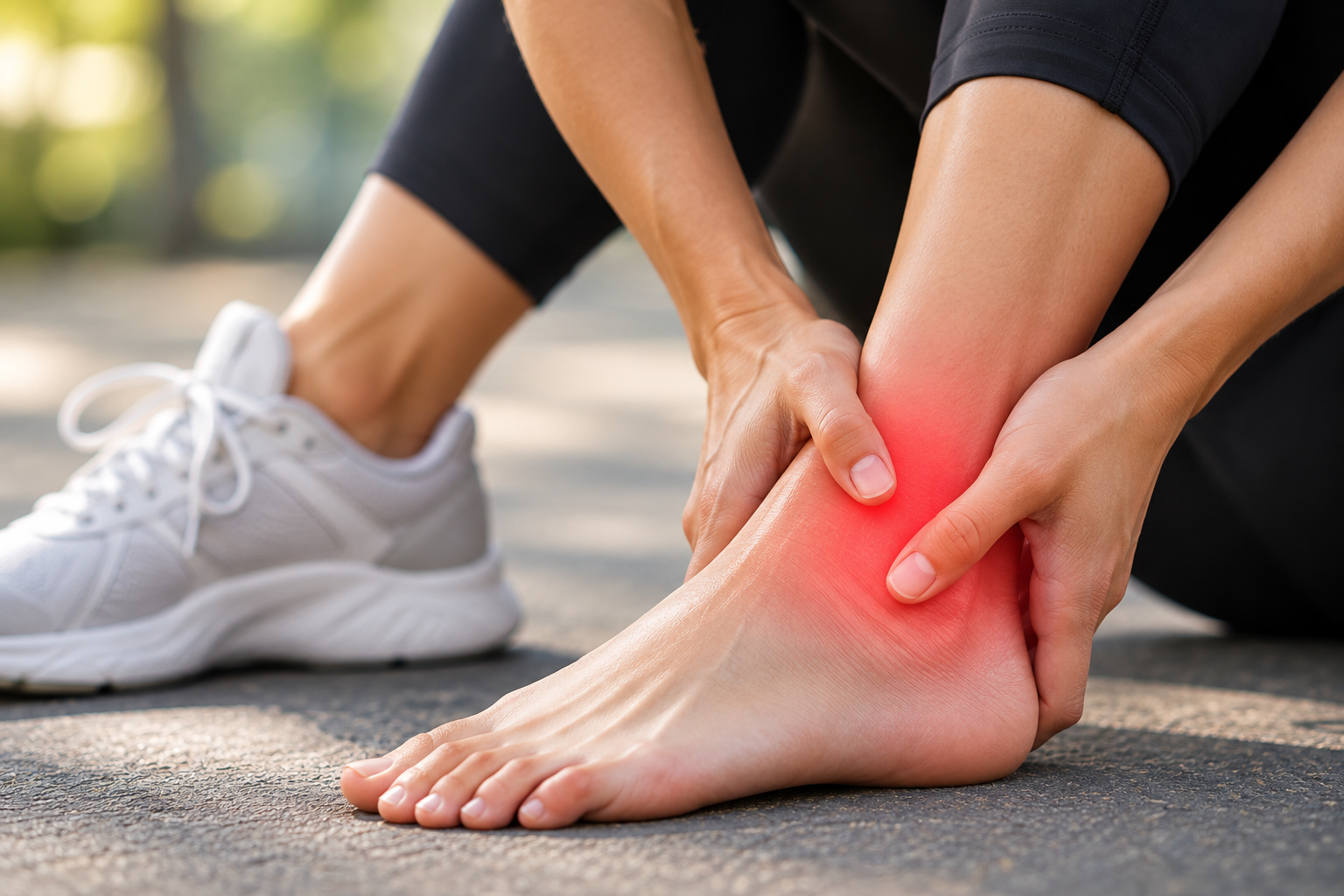
Twisted your ankle while running, playing sports, or simply missed your footing stepping off a curb? Not sure how long you might have to limp around for until it fully recovers? Whether you’re doing physio already, or just giving it the appropriate time for healing - Incorporating some acupuncture into the healing process is a must.
And, here’s why
Not only should you come out of a session feeling less pain, but the tension should improve, and overall the ankle should feel more mobile. Hopefully, getting you one step closer to walking limp-free.
Ankle sprains are among the most common musculoskeletal injuries. While some heal within a few weeks, others can leave you dealing with lingering pain, stiffness, swelling, or a feeling that your ankle isn't quite as stable as it used to be.
But why do some ankle sprains take so long to recover from, and can acupuncture help?
While rest, appropriate movement, and rehabilitation are essential for recovery. And although you might not be keeping up with your regular mobility exercises, acupuncture may offer complementary support for managing ankle discomfort during the healing process.
At AcuSoul in King West, downtown Toronto, we offer acupuncture and Japanese-style moxibustion for musculoskeletal discomfort, to address pain, swelling and inflammation due to ankle injuries.
1. Managing Ankle Pain with Acupuncture
Pain is often one of the biggest barriers to returning to normal movement after an ankle injury.
Acupuncture may provide pain relief for some individuals through its effects on pain modulation.
Reducing discomfort may make everyday activities more manageable, although this does not necessarily mean the injured ligament has healed faster.
2. Addressing Surrounding Muscle Tightness
Following an ankle sprain, muscles around the ankle and lower leg may become tense or sensitive as you compensate for the injury.
Common areas of discomfort include:
Calf muscles
Peroneal muscles
Achilles tendon region
Muscles surrounding the foot and ankle
Acupuncture, and heat therapy (moxibustion) may be used to address associated muscular tension and pain, particularly when symptoms persist during rehabilitation.
What Is Moxibustion? Heat Therapy for Ankle Stiffness and Muscular Discomfort
At AcuSoul, we incorporate Japanese-style moxibustion, a traditional heat therapy, into selected acupuncture treatments.
Moxibustion involves applying controlled heat through the burning of specially prepared mugwort, traditionally used in East Asian medicine.
Our Japanese-style approach uses small amounts of refined moxa to deliver localized warmth.
Moxibustion is traditionally used to address sensations of coldness, stiffness, and muscular discomfort.
In our clinical experience, some patients report feeling less muscular tension or stiffness following treatment. These changes may sometimes be noticed during or shortly after a session, although responses vary.
When Should Heat Therapy Be Avoided?
Heat therapy is generally not recommended directly over broken skin, or suspected infection.
At AcuSoul, we consider the injury's stage, current symptoms, and any medical precautions before deciding whether moxibustion is appropriate.
When Can You Start Acupuncture After an Ankle Sprain?
The appropriate time to consider acupuncture depends on the severity of the injury, whether a fracture or other significant injury has been ruled out, and your stage of recovery.
| Recovery Stage | Primary Focus | Potential Role of Acupuncture & Moxibustion |
|---|---|---|
| Acute Phase (First 48–72 Hours) | Protecting the injury, assessing severity, managing pain and swelling | Prioritize medical assessment and acute injury care; avoid direct heat over a swollen, inflamed ankle. |
| Early Recovery (Days 3–14) | Gradually restoring movement and comfortable weight-bearing | May be considered for pain-related symptoms after appropriate assessment. Often treatments begin with distal points (non-direct treatment) for safety reasons. |
| Rehabilitation (Weeks 2–6+) | Restoring mobility, strength, and balance | Complementary management of muscular discomfort (pain, stiffness, or swelling). |
| Later Recovery (6+ Weeks) | Improving strength, coordination, and return to activity | Acupuncture or Moxibustion for musculoskeletal stiffness and improving mobility. |
Note: Recovery timelines vary depending on sprain severity. More serious ligament injuries may require longer rehabilitation.
These timeframes are general and overlap considerably. Severe sprains, high ankle sprains, fractures, and associated injuries may require different rehabilitation timelines. It’s important to get the ankle assessed through scans first before beginning treatment.
How Long Does an Ankle Sprain Take to Heal?
Recovery depends on the severity of ligament damage and whether other structures have been injured.
Mild sprains may improve substantially within 1–3 weeks, while moderate injuries can require several weeks or longer. Severe sprains may take months before full function and sporting activity are restored.
Even when pain has improved, your ankle may not yet have regained its previous strength, stability, or coordination.
Returning to running, jumping, or sports involving rapid direction changes should be based on functional recovery rather than time alone.
Acupuncture and Physiotherapy: Working Together
Ankle sprain rehabilitation involves more than simply waiting for pain and swelling to disappear.
Physiotherapy and structured rehabilitation are important for restoring ankle function and reducing the risk of recurring injuries.
Physiotherapy focuses on:
Restoring ankle mobility
Strengthening the supporting muscles
Improving balance and proprioception
Retraining walking and running mechanics
Preparing for a safe return to sports
Acupuncture may focus on:
Managing musculoskeletal discomfort
Addressing surrounding muscle tension
Providing complementary symptom relief during rehabilitation
These approaches have different roles but both are essential to promoting a healthy and quick recovery.
Ankle Sprain Treatment in King West, Downtown Toronto
At AcuSoul in King West, downtown Toronto, we provide acupuncture and Japanese-style moxibustion for musculoskeletal discomfort, with treatment individualized to your symptoms and recovery stage.
We welcome patients who are already working with a physiotherapist, sports medicine physician, or other healthcare professional and are looking for complementary care.
If you're experiencing lingering ankle discomfort, stiffness, or muscular tension while recovering from a sprain, acupuncture may be an option to consider alongside your rehabilitation program.
Our goal is to help you recover more holistically through ankle injuries (managing pain, and tension). Hopefully, helping you to walk limp-free sooner rather than later.
Interested in booking a session?

Frequently Asked Questions About Ankle Sprains:
Can acupuncture help a sprained ankle?
Acupuncture may provide pain relief for some individuals with ankle sprains. Acupuncture should be considered a complementary treatment rather than a replacement for rehabilitation.
Why does my ankle still hurt months after a sprain?
Lingering ankle pain may be associated with an injury that hasn’t fully healed properly. Persistent symptoms should be evaluated rather than assumed to be part of normal healing. This is often times where acupuncture and moxibustion may be appropriate to improve circulation to the site of injury.
Can I walk on a sprained ankle?
Many mild sprains allow gradual weight-bearing as tolerated, sometimes with appropriate support. More severe injuries may require temporary protection or restricted weight-bearing. If you cannot take four steps or suspect a fracture, seek medical assessment.
How many acupuncture sessions do I need for an ankle sprain?
There is no established acupuncture treatment schedule for ankle sprain recovery. If treatment is appropriate, the number of sessions depends on your symptoms, injury severity, response to treatment, and rehabilitation plan.
Important: Acupuncture and moxibustion are complementary treatments and do not replace medical diagnosis, physiotherapy, or appropriate rehabilitation. Seek prompt medical attention for severe pain, deformity, inability to bear weight, numbness, a cold or discoloured foot, or symptoms that are worsening rather than improving.